Cattle Disease Testing & Herd Health Monitoring
Step 1 in the Raw Milk Roadmap • by Michelle Parsley, M.Photog., M.Artist, Cr.
Milk Safety Begins Before the Bucket
Milk safety begins long before the bucket is ever attached. It begins with the health status of the cow herself.
Clean equipment matters.
Rapid cooling matters.
But you cannot sanitize your way out of unmanaged disease.
Small herds have an advantage: control. Many Dexter families keep the same cow for 10–20 years. Long-term ownership makes preventive decisions more logical than reactive ones.
For that reason, I establish herd status through testing — and maintain it intentionally.
🧪 What I Test My Herd For
Disease prevalence varies by region and management style. Work with a veterinarian familiar with your area to determine what is appropriate. (See the Working With a Veterinarian page for guidance.)
I prefer to remove reasonable guesswork.
Bovine Leukemia Virus (BLV)
BLV is a viral infection that can impact immune function over time. Many infected cattle show no outward symptoms, yet the virus remains present in the bloodstream.
In a small herd producing milk for family consumption, I choose to remove that variable entirely rather than manage around it.
Bovine Viral Diarrhea (BVD)
BVD affects fertility, calf viability, and immune strength. The most serious risk comes from persistently infected (PI) animals, which shed virus continuously and can destabilize a small herd quickly.
Identifying and removing PI animals protects long-term herd stability — particularly in small herds where one infected animal can impact the entire group.
Johne’s Disease (MAP)
Johne’s is a chronic intestinal disease caused by Mycobacterium avium subspecies paratuberculosis. It progresses slowly and can remain undetected for years.
Because it spreads quietly and progresses slowly, testing helps prevent long-term uncertainty and loss. In milk-producing animals that are handled daily, I prefer clarity over assumption.
Tuberculosis (TB)
Bovine tuberculosis is caused by Mycobacterium bovis. While uncommon in many U.S. regions due to long-standing eradication efforts, it remains a regulated disease.
Because certain strains can affect both cattle and humans, maintaining TB-negative status is foundational herd stewardship. TB has been eradicated in Tennessee, but that is not the case in other states. Consult your veterinarian to determine if this testing is appropriate for your herd.
Brucellosis ("Bangs")
Brucellosis affects reproductive health and can cause abortion in cattle. It is also a reportable disease in the United States. Certain strains of Brucella are transmissible to humans, particularly through direct contact with infected animals or raw animal products.
For that reason, confirmed negative status matters — especially in raw milk-producing herds. Brucellosis is not a concern in Tennessee; however, that is not the case in other states. Consult your veterinarian to determine if this testing is appropriate for your herd.
Neospora & Anaplasmosis
Neospora can contribute to abortion or reproductive loss. Anaplasmosis affects red blood cells and can cause weakness or severe illness depending on exposure.
Both may be regionally influenced. Screening supports reproductive stability and prevents avoidable setbacks — which protects both animals and owners from unnecessary stress.
🧪 Additional Testing for Non-Virgin Bulls
A bull that has previously bred outside females carries a different exposure profile than a home-raised or purchased virgin bull. If a bull has serviced cows from other herds, whether through lease, purchase, or previous ownership, assume outside exposure until proven otherwise.
This is not alarm.
It is epidemiology.
Recommended Screening for Non-Virgin Bulls
In addition to your standard herd panel (BLV, BVD, Johne’s, TB, Brucellosis, Anaplasmosis, Neospora), consider:
-
Trichomoniasis (Trich)
A venereal protozoal infection transmitted through breeding. Bulls are typically asymptomatic carriers. Infected cows may experience early embryonic loss, repeat breeding, or open seasons. -
Campylobacteriosis (Vibriosis)
A bacterial venereal disease affecting fertility. Bulls can carry and transmit infection without outward signs. -
Repeat BVD testing if exposure timing is uncertain.
Venereal diseases do not typically impact milk safety directly, but they can profoundly impact reproductive stability. In a small herd, one infected bull can quietly destabilize an entire breeding herd.
When Testing Is Essential
- The bull is newly purchased and non-virgin
- The bull previously bred cows from multiple herds
- The bull was leased or commingled
- The bull jumped the fence and visited the neighbor's untested ladies
- There is unexplained infertility in the herd
The bull should be kept in quarantine and testing should occur before the bull is turned in with cows.
Why This Matters in a Small Herd
In commercial settings, reproductive loss may be absorbed across numbers. In a small herd, one infected bull
can mean losing an entire calving season.
While venereal diseases like Trichomoniasis and Campylobacteriosis are primarily reproductive concerns in cattle, ensuring a bull’s clean status protects herd integrity — which ultimately supports overall milk herd stability.
Why go to the trouble of testing?
Most of the diseases listed above are primarily livestock concerns. However, several are zoonotic — meaning certain strains may affect humans under specific conditions. In a raw milk context, maintaining documented negative status removes unnecessary variables and supports informed stewardship.
How Often Should You Test?
Testing frequency depends on exposure risk. Once you have baseline tests done, ongoing testing depends almost entirely on fence lines.
Closed Herd — No Shared Fences
If your herd:
-
Introduces no new cattle other than births
-
Shares no fence lines with other cattle operations
-
Has no nose-to-nose contact with outside animals of any kind
Exposure risk is minimal.
Once baseline status is established, periodic spot testing is sufficient, i.e. test one or two animals semi-annually.
Shared Fences or Open Herd
If your cattle share fence lines with neighboring cattle — even occasionally — or if you routinely bring in new cattle, your herd is not isolated.
In that case:
-
Annual herd testing is prudent
-
Semi-annual testing is the upper reasonable limit for most small herds
-
All incoming animals should be quarantined and tested before introduction to the herd
Shared boundaries create ongoing exposure risk.
Full fencing strategy, quarantine protocols, and boundary management are covered on the dedicated Biosecurity page.
🚧 Biosecurity for Small Raw Milk Herds 🚧 Testing establishes status.
Biosecurity protects it.
Where to Have Testing Done
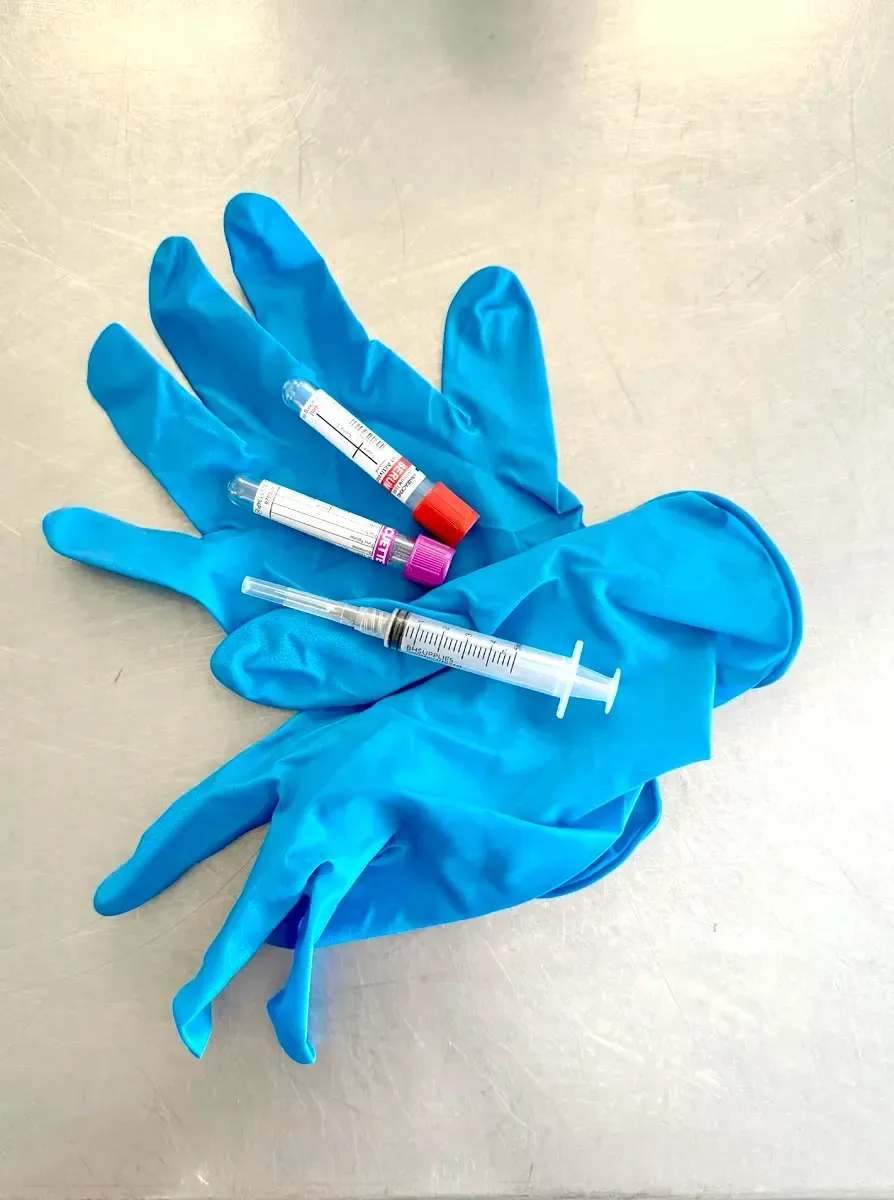
Most disease panels require simple bloodwork.
Blood draws may be performed by:
-
Your herd veterinarian
-
A veterinary technician
-
A trained owner comfortable with venipuncture
Samples are typically submitted to:
-
State Veterinary Diagnostic Laboratories
-
BioPRYN Laboratories (pregnancy testing and select disease panels)
-
Independent veterinary diagnostic labs such as Texas A&M Veterinary Medical Diagnostic Laboratory
Your veterinarian can determine the appropriate panel for your region and perform testing if preferred.
For guidance on building and maintaining a long-term veterinary partnership, see the Working With a Veterinarian page
⚕️ Working With a Veterinarian ⚕️Testing is not complicated. It is simply deliberate.
Can I test myself?
In many cases, yes.
If you are comfortable drawing blood, this is a skill many small herd owners learn. The mechanics are straightforward, and most disease panels require only a simple blood sample.
If you are unsure, ask your veterinarian.
In my experience, a good large-animal vet will often teach you hands-on and supervise your first few draws. That’s how I learned — including how to perform a jugular draw if a tail vein sample is unsuccessful. This is another reason why a strong working relationship with a veterinarian matters. Competence is built through guidance, not guesswork.
If you prefer, your veterinarian or a veterinary technician can always perform the draw and submit the samples on your behalf.
Demonstration: Tail Vein Blood Draw
In the video below, you can watch me perform a tail vein blood draw step by step.
***A step-by-step blood collection demonstration (tail vein and jugular) will be added here soon. The written protocol above contains all required testing guidance in the meantime.

Why This Matters for Raw Milk Families
When milk is consumed raw, there is less margin for unmanaged variables.
Sanitation matters.
Rapid cooling matters.
But herd health is foundational.
Testing reduces unknowns, and biosecurity prevents reintroduction.
Everything that follows in milk safety rests on step one of the Raw Milk Roadmap.
At Any Scale
Whether you milk one cow for your family or manage a herdshare program:
-
Establish baseline disease status
-
Close the herd whenever possible
-
Quarantine and test new animals before introduction
-
Annual testing if fences are shared
-
Work with a veterinarian familiar with your region
Scale changes convenience.
It does not change stewardship.
And stewardship undergirds every other step in the Raw Milk Roadmap.
Continue Building Step 1
This step includes four foundational components:
- How to Choose the Right Dexter Milk Cow
- ✅ Disease Testing & Herd Health Monitoring
- Biosecurity for Small Raw Milk Herds
- Working with a Large Animal Veterinarian
Explore each before moving to Step 2.